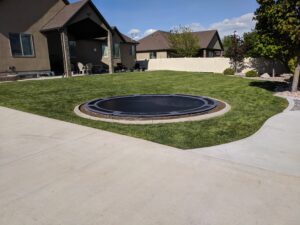
Whether your retaining wall should attach directly to your trampoline frame comes down to a simple rule of thumb—it depends on what your wall is made of:
Commercial Steel & Plastic Kits (ATTACH IT!): If you bought a pre-made steel or heavy-duty plastic kit, it should be attached directly to the frame. It locks everything together like an underground fortress, stops dirt from leaking into your pit, and keeps the whole setup locked down and stable.
DIY Wood or Cinder Block Walls (KEEP IT DISTANT!): Building a custom wall out of lumber, bricks, or concrete? Give it some space from the frame, Trampolines like to twist, flex, and groove as your jumping. Bolting a metal frame directly to rock-hard masonry is a fast track to loud, grinding squeaks and bent frame legs.
The “Breathing Room” Trick: For custom DIY walls, leave a cozy 1- to 2-inch buffer zone around the frame so the metal can bounce naturally without hitting into concrete, dirt, or grass. Then, just place your safety padding over the top to bridge the gap and keep feet away from the hole.
Bonus: The Insect & Weed Shield: An attached wall kit completely seals off the wall to all weeds, bugs, and excess dirt. Because it locks tight against the frame, you won’t have any weeds sprouting beneath your mat or bugs turning your jump pit into a gross looking piece of junk.
The Quick Takeaway: Purpose-built kits and made to go directly onto the frame, but custom wood and stone walls need their space so your trampoline can flex with no problems.